The War Garden Victorious
An illustrated 282-page edition of Pack’s 1919 account of America’s war gardens, with its two original gardening and preservation pamphlets and reader guides.
Catalogue
Read the history of storing, curing and preserving food through three restored works from 1864 to 1917. The collection covers winter vegetables, fermentation and pickles; Victorian meat, game and fish curing; and Maria Parloa’s writing on fruit, preserves and jellies. The editions retain historical wording and distinguish original figures from new interpretive artwork and reader guides. These books are for reading and research, not current food-preservation instructions. Some methods are unsafe today. For preparing or storing food, use current research-tested guidance rather than these historical recipes.
An illustrated 282-page edition of Pack’s 1919 account of America’s war gardens, with its two original gardening and preservation pamphlets and reader guides.
A 53-page illustrated edition of Minnie L. Jamison’s 1917 First World War cookbook on cooking with less wheat, meat, sugar and fat.
No book matches that search. Try an author’s surname or a single word from the title.
Context for your reading
In 1917 the kitchen joined the war effort. See how Minnie L. Jamison’s booklet asked households to save wheat, meat, sugar, fat and fuel, and what should not be copied today.
Read the article
A 1917 manual treats the harvest as the beginning of another job: storing food through winter. Explore its cellars, pits, household labour and wartime purpose as history, not instructions.
Read the article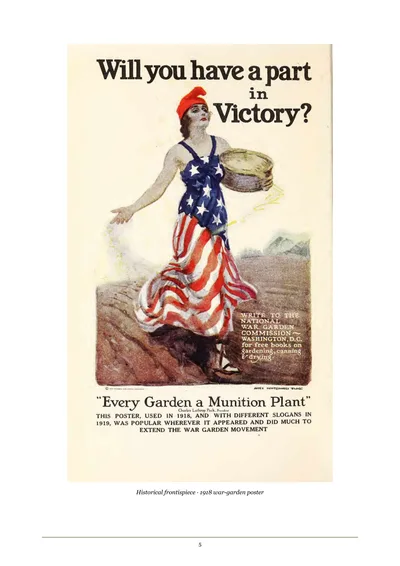
Victory gardens did not begin in the Second World War. Read the First World War campaign through Charles Lathrop Pack’s 1919 book, its community projects and wartime posters.
Read the article